 Jim
Shooter died on June
30, 2025. His death was reported widely, of course; for those who
don’t know, Shooter was Editor-in-Chief of Marvel Comics from
January 1978 to mid-April 1987. He was, to put it mildly, a
controversial figure, perhaps most famously
(infamously?) depicted in THE
COMICS JOURNAL
#171 where a Gary Groth written piece was simply titled, “Jim
Shooter, Our Nixon.”
I only met Jim Shooter once, here in Ottawa at the
2018
edition of the Ottawa Comiccon on May 11, though
we had exchanged a
few emails prior to this in-person meeting.
He was kind enough to accept an early copy of the very first volume
of my WOLF’S
HEAD. Sometime later, on October
13, 2019, he gave me some feedback.
That is what I’m going to talk about, because I think it
addresses something that Shooter has been maligned about. We’re
gonna get there, but first, I need to do an aside. Here goes.
Aside: On Jim Shooter’s Alleged Homophobia
I’ve
noticed that his current Wikipedia page, as of this writing
(September 3, 2026), has a section on his alleged homophobia.
Here’s
a screencap, but I’ll
quote the section in full; I did drop the linked References (you can
find them in the archived
link, of course):

“During Shooter’s tenure, he enforced a policy forbidding
the portrayal of gay characters in the Marvel universe. According to
John Byrne, he initially had to conceal Northstar’s sexuality,
since Shooter personally told him that portraying a gay character
would not be allowed. Marvel nonetheless published the first
gay-themed story by a mainstream comics publisher during this time,
written by Shooter himself; in it, two gay men attempt to rape Bruce
Banner. Comics historian Frederick Luis Aldama says that Marvel under
Shooter’s tenure ‘was widely considered homophobic.’”
It’s interesting
to me that no mention is made of the Comics Code Authority (CCA)
and its role in the suppressing the
depiction of homosexuality since the mid-1950s.
Ethan Parker, in his COMICS
CODE REPEAL, notes “The
Comics Code Authority, established in 1954, imposed strict rules on
comic book content, effectively banning
any positive or even neutral portrayals of homosexuality. It wasn’t
until the early 21st century that major publishers began to seriously
challenge its influence.” [my emphasis added]. Amy
Kiste Nyberg, in her SEAL
OF APPROVAL: THE
HISTORY OF THE COMICS CODE, noted
the following, “Comics also became somewhat more graphic in
their depiction of violence and sex, and occasionally the code
authority issued memos interpreting the code regulations. One such
memo was issued April 13, 1974, and clarified the definitions of
‘excessive bloodshed and gore’ as well as warning
publishers about their treatment of sex.” Nyberg notes that
Code administrator Leonard Darvin’s
memo also noted, “… homosexuality or any suggestion of
it by illustration, dialogue, or text was strictly
forbidden.” [my
emphasis added]
Given what we know, would it not be more fair to
say that Shooter was concerned about Code approval? One
could interrogate whether he was or
was not prepared to challenge them, as
Marvel had done
in THE AMAZING SPIDER-MAN
#96–98. Of course, Lee had the backing of the United States
Department of Health, Education and Welfare, something that Shooter
obviously did not have. As Don & Maggie Thompson wrote in their
NEWFANGLES
fanzine (#44,
February 1971; you can also read a cleaned-up screencap here), “According to a long and fascinating story
in NY
Times (4 Feb 71),
Lee was asked to
do the story by
the National Institute of Mental Health, a branch of the US
Department of Health, Education and Welfare. John Goldwater
(publisher of Archie Comics and an opponent of Code liberalization —
his line has nothing to gain from relaxation of the Code) refused
approval; Leonard Darvin, code administrator, was ill and Goldwater,
president of the Comics Magazine Assn., fought against allowing the
story. Lee and Publisher Martin Goodman, after a story conference and
a stormy session with the CCA, decided to publish issues 96-98 of
SPIDER-MAN
without the seal.”
Now, a key point is that the SPIDER-MAN
issues were
a specific
story arc (dealing with drugs)
rather than dealing with an intrinsic aspect of a character (their
sexuality, that would presumably be
an ongoing aspect of their character).
From my point of view, an honest entry in
Shooter’s Wikipedia
entry would
address all of this. Otherwise? Well,
we get what we got: an attack on Shooter without any context about
why he
might have felt the need to
enforce these policies.
I don’t know if
most contemporary readers of comics and graphic novels understand how
catastrophic the Comics Code Authority was to the medium of comics.
As Stan Wiater
and Stephen Bissette note in their COMIC
BOOK REBELS : CONVERSATIONS WITH THE CREATORS OF THE NEW COMICS
on John L. Goldwater’s AMERICANA
IN FOUR COLORS: A DECADE OF SELF REGULATION BY THE COMICS MAGAZINE
INDUSTRY, “Rare
and long-out-of-print, this remains an essential presentation of the
Comics Code Authority’s reign by its founding father, John L.
Goldwater, who was also the publisher of Archie Comics. A slight but
fascinating, infuriating, blood-curdling censorship (excuse us, we
mean “self-regulation”) document which tells the reader
more about the Code than most comic book creators and editors who
continue to work under CCA rules know!” Remember
folks: while the Code is thankfully gone,
censorship still continues.
Getting back to Shooter’s Wikipedia entry,
the excerpt’s last line (“Comics
historian Frederick Luis Aldama says that Marvel under Shooter’s
tenure ‘was widely considered homophobic.’”)
is 100% incorrect.
Aldama did NOT say that. How do I know?
Aldama is the editor
of THE
OXFORD HANDBOOK OF COMIC BOOK STUDIES,
but when I searched “inside
the book” on Oxford Academic’s website, I discovered the
“was widely considered homophobic” quote is
in reference to Nicholas E. Miller’s chapter titled “Disco,
Derby, and Drag: The Queer Politics of Marvel’s Dazzler.”
Miller wrote the following on the very
first
page of his piece, second paragraph, “Although Dazzler has
long been canonically heterosexual, the case can be made for
reclaiming the queer subjectivities of her early comics in order to
understand how they opened up space for queer readings of her
character—particularly in a period when Marvel Comics (under
editor Jim Shooter) was widely considered homophobic.” That
is the source of the attribution to Aldama. Unfortunately,
Miller does not
present any citations for this claim,
which I find
pretty odd given
that he used a number of end notes in his essay, along with a number
of cited works. This
absolutely needed to have a citation, preferably more
than one, to back up Miller’s
claim, especially in the face of what we
know about the Comics Code Authority.
Without it? Well, it’s an allegation and one I’m
surprised that editor Aldama did not
challenge.
Now, let’s move on to another Wikipedia
allegation. The entry
notes, “Marvel nonetheless published the first gay-themed story
by a mainstream comics publisher during this time, written by Shooter
himself; in it, two gay men attempt to rape Bruce Banner.”
While the rape attempt is
true, it occurred in HULK
#23, the non-Code magazine format publication that Marvel was
publishing at that time. I’m going to say that again.
HULK was a
NON-code magazine. Issue #23 has a cover date of October 1980 and
features Shooter’s story “A
Very Personal Hell” illustrated
by John Buscema, Alfredo Alcala, and Steve Oliff. And yup, I own the
issue in question. Is it perfect? Nope.
Would I have done it? Hell, no. Shooter does
engage in stereotypes in the story (in
the form of rapists Dewey and Luellen) and
it’s regrettable, to say the least.
By the by, Shooter
has said as much himself (see
his comments at
https://jimshooter.com/2011/07/epic-interfereence.html/#comment-1962).
I tend to share Brian
Cronin’s point of view on this story; I would strongly
argue that when there is little to no representation, then it
behooves a writer to make damn sure that they aren’t using
stereotypes. As Shooter himself noted in
the linked comment, “When I wrote the story, I wasn’t
thinking about what was or wasn’t going on in mainstream
comics. I was thinking about that story. It didn’t appear in
‘mainstream comics’ anyway. It appeared in a Code-free
magazine. I didn’t ponder what was going on in mainstream
magazines, either. I was just trying to write a good story based on
experiences I was close to. I wish I had been smarter, wiser, more
conscious of what that little bit might mean in the great context of
comics publishing, but I wasn’t. The preceeding [sic]
sentence was not written in a snarky way. I
mean it. I wasn’t as aware as I should have been, or someone
better prepared than me might have been. But I was younger then, and
so was the world. That’s the only excuse I can offer. Sorry.”
One other key point
about that sentence in the entry.
It notes, “… two gay men attempt to rape Bruce Banner.”
The Wikipedia entry clearly posits
that the two men, Dewey and Luellen, are gay. Based
on the printed text in HULK
#23, we do not know that. I’m
going to say that again: we do not
know that. Why? Way back in 2002, Matt
Seaton wrote the following in THE
GUARDIAN:
“But the
estimate is that at least half of male rapes are of heterosexual men
(and usually by
heterosexual men). Besides the inevitable feelings of humiliation and
guilt that go with rape victimisation, the straight male rape victim
typically experiences a loss of sexual identity.
The codes on which heterosexual masculinity rests
are bizarrely differential. Consensual anal sex between men is always
defined as homosexual. In non-consensual
anal sex, however, agency is all. No assumption can be made about the
sexual identity of the man who penetrates. If straight, he may
perform this "gay" sex act coercively without compromising
his heterosexual status. Yet the penetrated man is always emasculated
and made de facto homosexual.” [my
emphasis added]
Were Dewey and Luellen gay? The Wikipedia entry certainly thinks so,
but I’m not so sure. Given Seaton’s article and others
like it, I would make the counter-argument: Dewey and Luellen are not
gay, but were going to rape Banner anyway. The difference is all
the difference.
Okay, since I’ve now spent a few paragraphs on this, why am I
bothering? The answer is simple: Wikipedia can be weaponized
to attack people. Y’know, along the lines of, “Oh, you
don’t think Shooter was a homophobe? Check out his Wikipedia
page. See? End of conversation.” Yeah, well fuck that. I
do not believe in that. If someone makes an allegation, even when
it’s clouded by the authority of Wikipedia itself, they need to
back that up with actual citations. Context matters.
Shooter’s explanation of the HULK #23 story matters.
Challenging Miller’s “… Marvel Comics (under
editor Jim Shooter) was widely considered homophobic” line
matters. Otherwise, if it is left unchallenged, a view is presented
that, over time, solidifies as fact.
Was Shooter homophobic? I don’t know. Given his age and date of
birth (1951), he might have been. Here’s a better question: was
he more homophobic than anyone else from that time period? I doubt
it. Hell, our culture still deals with unrelenting homophobia.
Fuck people, 21 year old Matthew Shepard was murdered in 1998. 14
year old Jamey Rodemeyer committed suicide in 2011. And so many
others. So many others.
***
Okay, with that out of the way, let’s move on to what I
actually wanted to talk about. Namely, the sensitivity of creators to
Shooter’s difficult creative comments. As I noted in the
beginning, I was fortunate enough to meet Jim Shooter in May 2018
here in Ottawa while he was attending the Ottawa Comiccon. We had
spoken by email prior to the event; I was having a helluva time
tracking down a copy of SEVEN,
the comic he wrote for Intrinsic Comics back in 2007. He was kind
enough to bring me a comp copy of it. I was blown away by that; he
was kind enough to find the comic and bring it along with him
in his luggage.
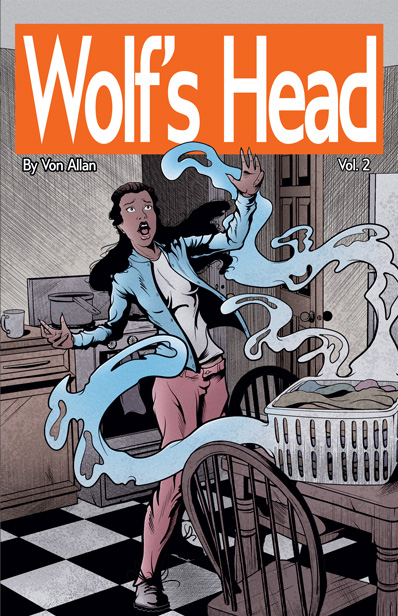
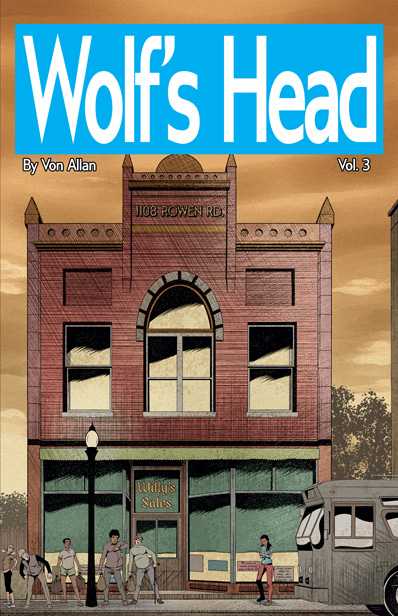
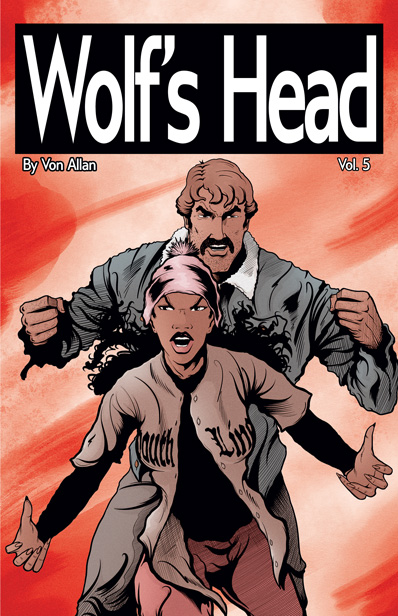
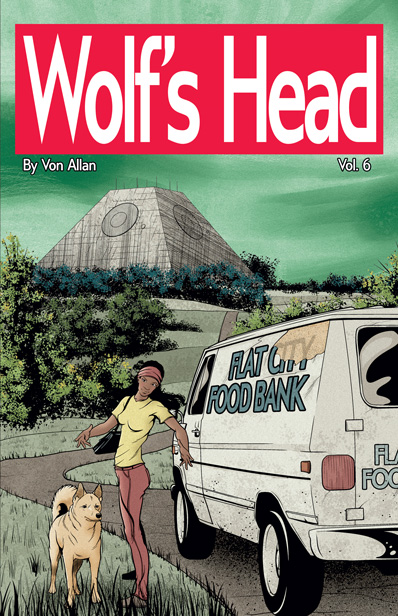
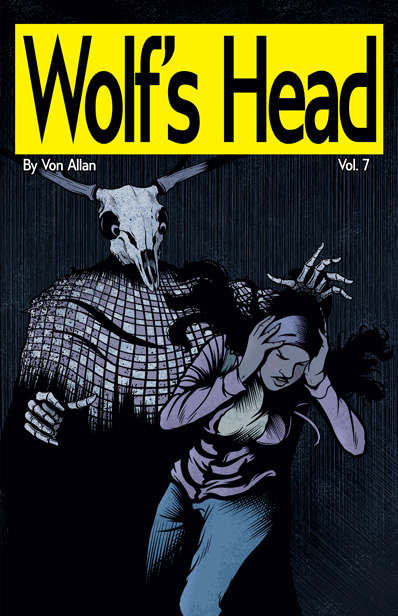
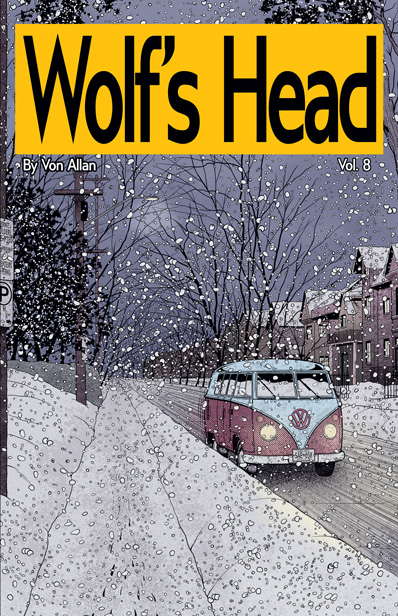
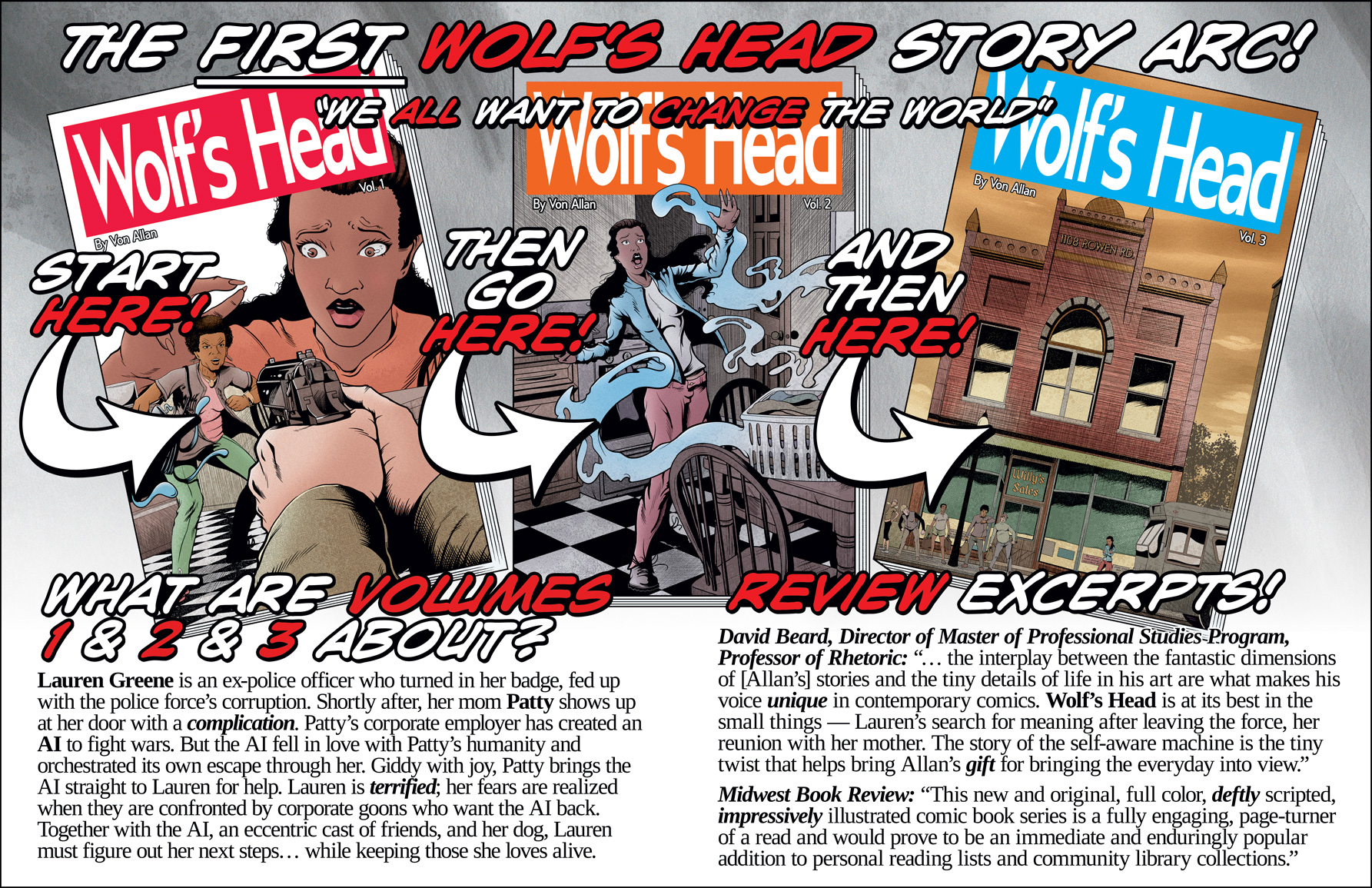
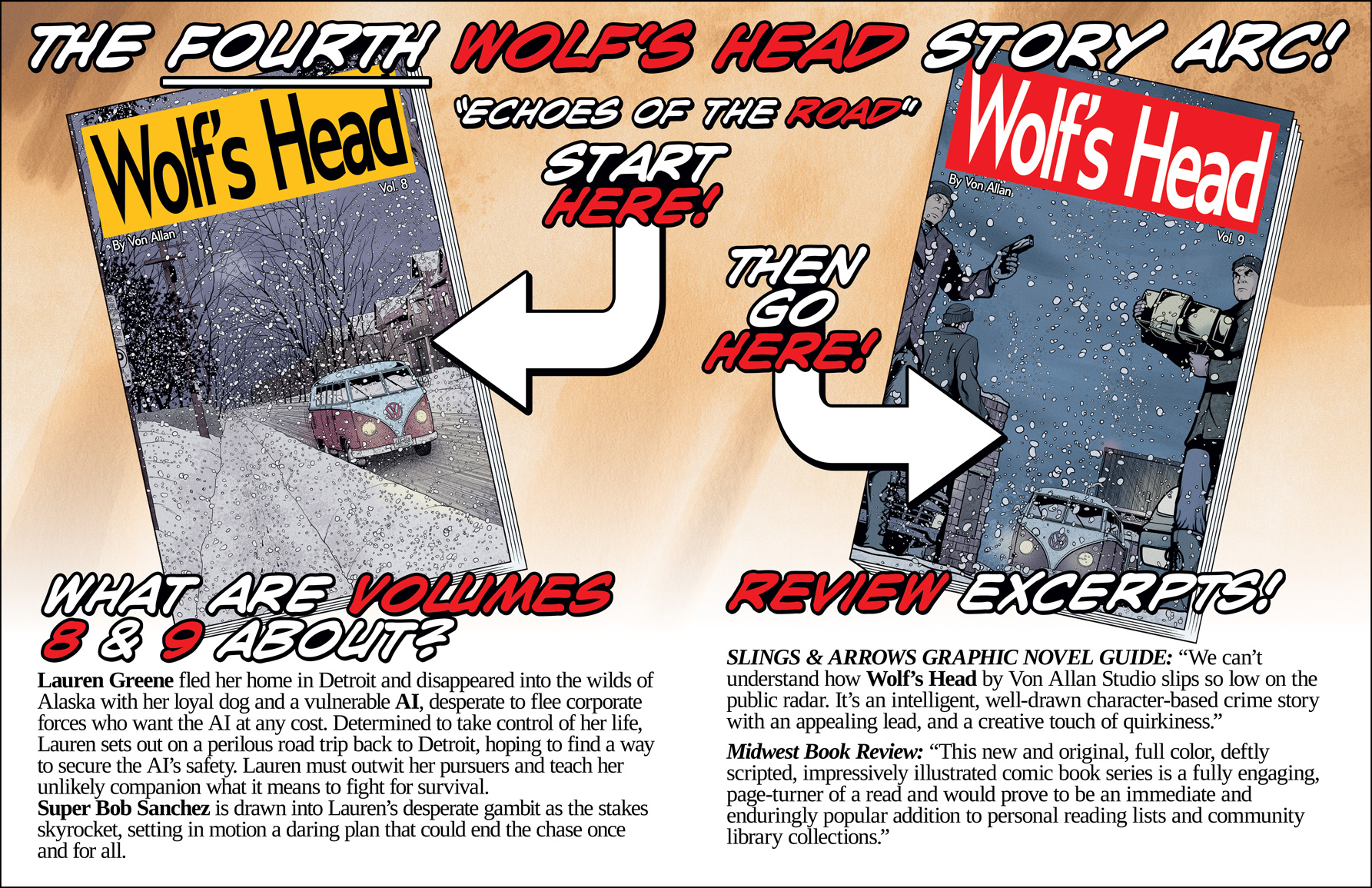
As we chatted, he graciously accepted a copy of my WOLF’S
HEAD #1. That took some nerve; I wasn’t sure he’d
want to be bothered by some wannabe creator he’s never heard of
and I sure as hell wasn’t sure he’d want to lug my comic
back home with him. But he did and he did. I was incredibly honoured
by that. To be clear, due to being small press and due to Diamond
Comic Distributor’s “minimum sales threshold,”
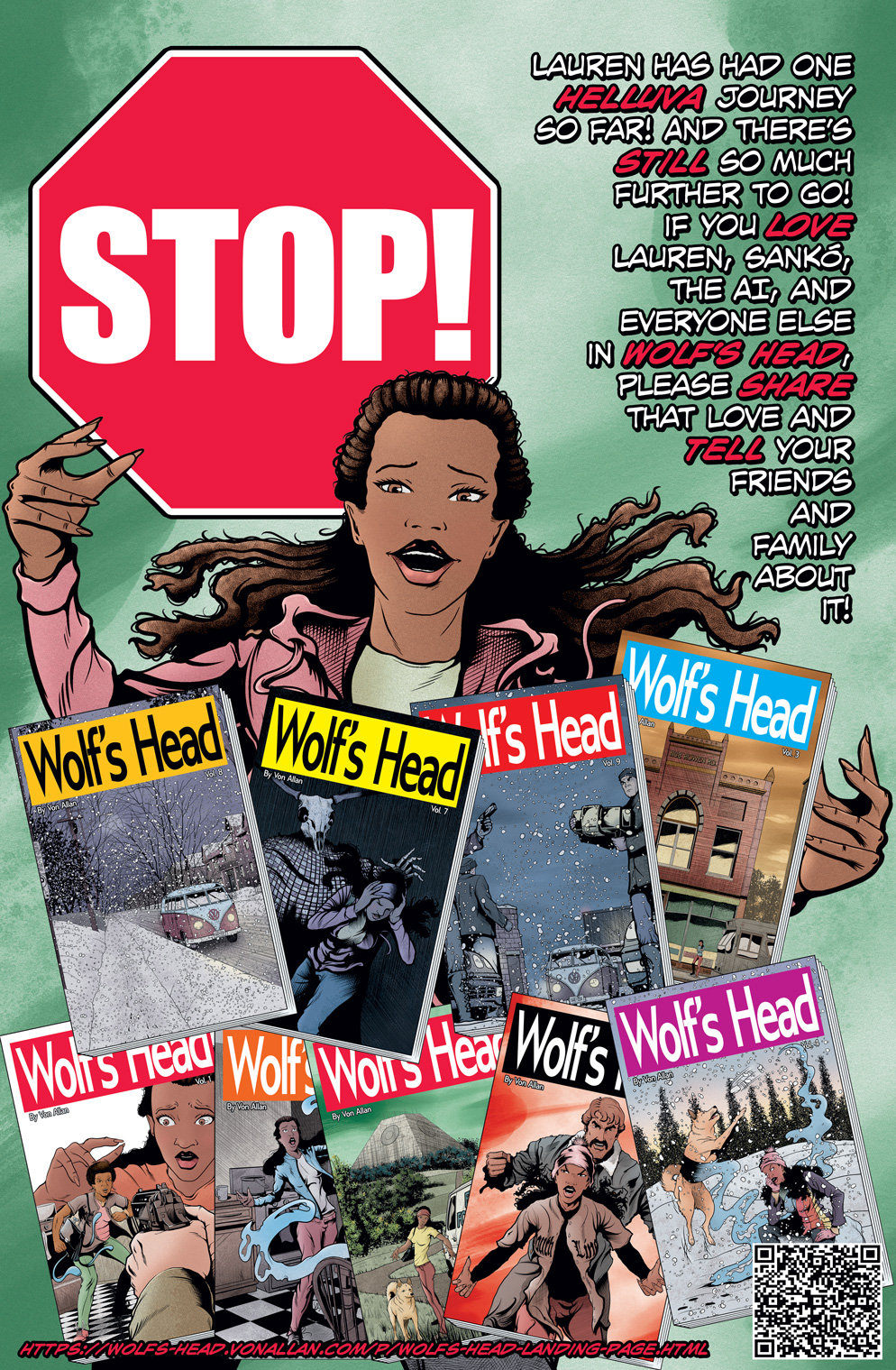
each volume of WOLF’S
HEAD has been released in a 60 page trade paperback format.
In other words, each volume contains two issues of a normal
periodical comic.
I also brought a copy of JIM SHOOTER: CONVERSATIONS
with me,
a collection of interviews that was put together by the University
Press of Mississippi, that I was hoping he would sign. He did, but he
hesitated. My understanding in talking with him is that he was not
super happy with how that book initially turned out. If I’m
remembering correctly (and yup, this is anecdotal), he needed the
help of his longtime friend and interviewer Harry Broertjes to smooth
out some problems with it.
At any rate, he signed my book, we chatted quite a bit about
storytelling, and that was that.
About 18 months later, he wrote me an email that detailed his
comments on WOLF’S
HEAD #1. I’m going to share them with you raw and
unedited (except where I redacted his phone number), but before I do
that I want to quote an interview he did with Joe Martin back in 1992
that was reprinted in JIM SHOOTER: CONVERSATIONS. Why? ‘Cuz
it’s relevant! Here goes:
Jim
Shooter: “I’m probably not the most natural
warm-and-fuzzy type. I also think that perhaps since I’ve been
in this business for a long time that I sometimes move too fast for
people. I’ve been given advice like if an artist is doing three
things wrong, maybe just tell him two of them and save one for later.
That’s a good theory and it works sometimes, but sometimes it’s
like, ‘You’re on stage tonight!’ I just feel like
it’s not fair to the reader. The reader expects it to be right.
I run into the problem where people feel like I’m pushing too
hard. But we’re performers, and we’ve got to perform. I
wish my delivery was more graceful. Stan (Lee) can tell you you’re
doing something wrong, and you walk out feeling like a million
dollars.”
Joe
Martin:
“Constructive criticism is an art form in itself.”
Jim Shooter:
“Absolutely, and Stan Lee had mastered it long ago. I
struggle. People tell me, ‘First, you tell ’em something
nice, and then you kind of ease into what they’re doing wrong.’
That’s so hard for me. I’m like, ‘Oh, uh, well…you
do great eyebrows, but let’s talk about these ugly noses…’
I don’t know. I feel…
hypocritical or like I’m trying to con these people, and I
don’t want to do that. I’d rather be direct. Some people
actually take my directness wonderfully well and have no problem with
it, but there are some who take it as more confrontational.
Communication is a major human problem, and I’m probably not
the best in the world at it. I feel like if you check with the people
who work with me and the people who really know me, then you’ll
see we get along. If I was a real problem to work with, then
Claremont wouldn’t be back here. Weiss and Lapham wouldn’t
be here.”
And one more, this time from a 1993 interview with Marty Grosser that
was was reprinted in JIM SHOOTER: CONVERSATIONS:
Jim
Shooter: “I think that if you’re an editor and you
do what’s right, you occasionally have to say ‘no’
to people. To the good people, the professionals, that’s fine.
But the people who are hacks, they won’t like that.”
Jim Shooter’s Email To Me (Dated October
13, 2019, Comments on Wolf’s Head #1)
Dear Von,
Years later, here I am.
My comments re: Wolf’s Head #1, for whatever they’re
worth at this point.
The cover:
So important.
The logo is bold and clear, I’ll grant you that. However, it
has no distinctive relationship to the contents. Movie logos almost
always do. Look here:
https://www.nonstopsigns.com/blog/best-movie-logos-of-all-time/
Comic book logos seldom have any relevance to the contents of the
book, but they should. Check out my early VALIANT logos (1991
through UNITY). It can be done, but comic book creators usually
can’t be bothered.
What’s more worrisome is that the title itself doesn’t
tell a potential reader anything either. “Wolf’s Head.”
No wolves in evidence, no discernable reason for the title. To me,
Wolf’s Head is motor oil.
So, the title offers no information.
Neither does the illustration. Fake car. Two people who look
thoughtful. Nice faces. Distractingly fake wrinkles and drapery on
the clothes. Nice dog.
No clue what this is about. Not even enough of a hook to make people
curious.
The interior:
The first scene is heavy handed and artificial. It’s
propaganda. Even if I happen to agree with your point of view, no
one enjoys propaganda. It’s fine to have a character express a
point of view, any point of view, but if the reader feels like he or
she is being lectured by the author, it’s off-putting. Your
first scene is your worst scene. It should be one of your best.
But you make your point. Lauren works with some bad cops. She’s
appalled.
One more thing about the first scene. If you’re going to hurt
or kill a character or characters, like the two protesters suffering
police brutality, make the reader care about them first. If they’re
cipher people—innocent manikins there to knocked over by
Snidley Whiplash manikins—it’s hard to care. Humanize
characters first. Then readers will care.
Think how they would dramatize the story point you want to make on a
good TV show about cops. Hill Street Blues come to mind, which
should give you an idea of how old I am. There are more recent ones
I’ve heard are good, like The Shield and NYPD Blue. How would
they dramatize your story point?
The rest of the tale is pretty good. There are some very nice
moments. I love the idea that daughter is smart and tough, but it’s
mom who has the “super power.”
My main problem with this story is that it’s not a story, it’s
a history. A lot of comic book writers these days fall into that
trap. Learn story structure. There are no good books about writing
comics, but there are some excellent books on screenwriting, which is
similar. Avoid Syd Fields. He preaches formula.
In two issues, what story is there? This: Lauren is a cop,
presumably happy with that. Lauren parts company with the police,
because she discovers they’re morally appalling. Lauren
struggles to get another job. Desperate Lauren finally gets a job,
not a good one but not morally appalling.
Other than that, it’s all set-up for stuff that may happen in
the future.
People want stories. For 40,000 years, and probably for the next
40,000, people have wanted and will want good stories well told. I
can explain why but not in this e-mail, it would take too long.
This I’ll say: There is a definition of “story.”
There is no formula, that’s not what I’m talking about.
There is a definition of “sentence,” too. Neither of
those definitions limited, impeded or homogenized Shakespeare, Twain,
Hemingway, Salinger, Steinbeck, Grisham, J.K. Rowling, the writers of
Laverne and Shirley or anyone else.
Every unit of our language has a definition. All western languages,
for that matter. They all share the same or similar syntax. The
fact that “essay” has a definition didn’t bother
Jonathan Swift, Mark Twain, the writers at Paper Magazine or anyone
else.
A lot of what you wrote is very good. Nice bits, some nice dialogue.
But, it’s a history.
Nothing you did is wrong. Everything you wrote can, and should be
part of the tapestry. But you need to tell stories. Bring forth
your ideas, what you have to say, in stories.
Learn your craft.
P.S. Lauren does a significant amount of moralizing throughout.
After the first contrived scene, however, I don’t mind it,
because it’s clearly her talking, not her mouthing a lecture
from the author. The fact that I agree with almost every word she
says is irrelevant.
About the art: You draw well the things that interest you—faces,
gestures, dogs. Things that do not interest you—clothing, cars
buildings and almost everything else looks amateurish and fake. If
you put as much effort into those things as you do the things you
care about, you could be very good. It’s not a matter of
style. Bernie Wrightson’s style was different from C.C.
Beck’s, but neither faked anything. Even Carl Barks, take a
look. He was drawing simple cartoon characters in a cartoon
landscape, but every perspective was perfect, every proportion was
perfect and on every simple, item of cartoon clothing the folds and
wrinkles flowed from the stress points perfectly.
If you would ever like to talk about any of this, my number is
XXX-XXX-XXXX. E-mail me your number first, so I recognize it.
This work isn’t easy. Some people think that because they can
type a sentence, they can be writers. That’s a lot like
thinking they can be dentists because they have teeth.
Again, learn your craft. You have talent. You’ve got the hard
part down, which is having something to say, having a story to tell.
No one can teach that. The easy part is also hard, which is learning
the craft, but it can be learned. Go for it.
Best,
Sincerely,
Jim Shooter
***
So, there you have it. Did I have a temper tantrum when I read his
email? No. Did I curl up in a ball and cry about it? NO. Shooter was
firm and tough, but fair. Way back in 2010 I was reading Seth Godin.
While I stopped doing that ages ago, he wrote a piece titled “Who
judges your work?” Godin’s last line has always
stayed with me, “The ability to choose who judges your work —
the people who will make it better, use it and reward you —
is the key building block in becoming an artist in whatever
you do.” That is why I went to the Ottawa Comiccon in the first
place; I’ve never gone before and I’ve never gone since.
I only went to see Jim Shooter because I have a profound respect for
his storytelling philosophy. And yup, I do feel pretty damn strongly,
contra Gary Groth and folks like him, that Shooter’s
storytelling philosophy is really missing from most contemporary
comics.
Do I agree with every single thing Shooter wrote? No. Was I
incredibly honoured that he took the time to really examine my work?
Hell, yes! Did I take what he said to heart and make some changes?
HELL, YES! I thought he was right about a number of things. Drapery,
perspective, story, and so on. I worked my ass off to improve that
and I think I’ve accomplished that, but here’s the thing:
the learning never stops. We never stop growing, learning, striving.
That’s the whole damn point.
What about things I didn’t agree with? Well, here’s an
example where he was wrong, but in a quick twist, he was also right:
the car. He was definitely wrong. It’s not a fake car at all.
It’s actually a Lada,
specifically based on a VAZ-2106.
But! Here’s the quick twist: it “read” to him as
fake and he interpreted as fake. That was one helluva lesson to
learn. I was trying to do a quirky car so that Lauren, my
protagonist, would drive a car that most people didn’t. It was
distinctive, maybe not Batmobile-distinctive,
but different than a lot of what was (and is) on the road. And I saw
some of these growing up here in Canada. So I thought I was
being pretty clever, but I thought wrong. Shooter’s point about
it being fake trumped my clever idea. Even though he was wrong
about it being fake, he was right about it “reading”
fake. And that’s the point.
In a similar vein, the logo for WOLF’S HEAD. I wanted a
“clear as glass” logo that one could easily read in
person, but one that could also be read on a screen when using
a search engine. In other words, I wanted the logo to be readable
when seen as teensy little thumbnail, particularly when viewed
against other images. From that point of view, the logo works.
However, as with the car, Shooter is absolutely correct; the logo
does not give any insight to what the series is.
Live and learn.
Another was when he wrote, “You draw well the things that
interest you…”
Here I think he mistook a lack of interest with a struggle. I was
still struggling to grow
stronger and yup, I definitely struggled with perspective
and the like. That’s something I realized that I had to put
more effort into and I think the result speaks for itself (for some
perspective examples, try here,
here,
and here).
More broadly, WOLF’S
HEAD benefitted from Shooter’s comments. In particular,
I redrew some things and wound up with a new version of Volume 1. I
think he would still have critiques, mainly because I simply couldn’t
go in and “fix” everything that he had addressed, I think
its stronger for his comments than it otherwise was. And that’s
something I’ll always be grateful for.
Let’s look again at Shooter’s storytelling philosophy.
In THE COMICS JOURNAL #60, Gary Groth interviewed Shooter and they had the following exchange:
Jim Shooter: “Now,
there are a lot of misconceptions out there in the world about what I
require or what Marvel requires. There’s always nonsense about
there being a ‘Marvel formula’ even among my own writers!
Apparently things have been said to these writers by editors or
people before me and they have their own misconceptions which they’ve
made into rules in their own minds. Whatever. But I’ve heard
Marvel writers quote a ‘formula’ to me that supposedly
they’ve been told to follow by previous administrations. I’ve
heard people say, ‘Oh yeah, it includes a fight.’ I’m
sorry, but it doesn’t. I’ve never said there has to be a
fight. And certainly not a fistfight, because the most boring thing
in the world to me is two characters standing there punching each
other.
… It used to be very common to hear, ‘Well, if it’s
any good, it’s going to die. The only way to make comics sell
is to do the same old stuff.’ This is from the people who were
supposed to be in charge creatively? I’m not talking about Stan
[Lee], here. I’m talking about folks from my level on down. In
a way I can’t blame them for seeing things that way, because
they would see things go out like [Jim] Starlin’s WARLOCK
and slowly die, and it was like I could never believe that it never
occurred to them that there might be something wrong with that that
was killing it. Like the fact that it was muddy and hard to read. And
the fact that it was just a little too copy-heavy. And it was hard to
pick up in the middle. And that it really wasn’t technically
well-written sometimes, in the sense that it really didn’t
have introduction of characters, introduction of conflicts, twists,
building of suspense, reaching a climax and a resolution…”
Gary Groth: “Of course, that could be called the formula.”
Jim Shooter: “All right, if people choose to call that the
formula, then fine, as far as I’m concerned there is a formula
to every story ever written.”
Gary Groth: “But there isn’t, because a lot of novels
don’t have that kind of formula where things are…”
Jim Shooter: “I think that anything that doesn’t have a
conflict, by definition is not a story. Now if you have those things
in other orders, I don’t care. If you are so good that you can
start a story in the middle or start it with the end and work it
inside out, that’s a tribute to your skill as a writer. It
doesn’t have to come in that order. The events don’t have
to be any particular type of events. Your conflict can be an internal
conflict of a character, it can be a characterization story. There’s
no limit. That’s just so broad as to include almost everything.
That from WAR AND PEACE to ‘Little Miss Muffet.’
I think that if it doesn’t fit in there, fine, accuse me of
having a formula. But I’m not talking formula, I’m
talking about fundamentals of writing. If a guy wrote something in
which the grammar was so bad that it could not be understood, I think
that would be an equivalent situation. It’s just that this
situation is less obvious, because someone will be reading a comic
book and they will be understanding every word they read, they’ll
be understanding every sentence, they’ll be understanding every
balloon, they may even understand every panel, but it still can add
up not to be a unit, a story.”
The broader takeaway is you have to have a thick skin combined with
an open mind and a willingness to learn. And, of course, a
willingness to fail (ahem: fall on one’s face!), something I’ve
done over and over again. The only way to learn is to try, put
oneself “out there,” and see what happens. My frustration
with the comics industry is really about how few people are like Jim
Shooter. He was not “just” a writer and a visual artist, nor was he “just” an editor,
but he was a teacher.
***
Last point, because I think it’s important. Could Shooter be
dictatorial? Well, yeah. In a 2016 interview with Jason Sacks, Eric
Hoffman, and Dominick Grace that appeared in (you guessed it!) JIM
SHOOTER: CONVERSATIONS, Shooter said, “I had to be fairly
strict. A lot of people would say that I was…
If you tell a guy nicely ten times or five hundred times that you
have to introduce the characters, about the five-hundred-and-first
time you tell them, you tell them a little louder. Maybe I was
dictatorial… I was not
willing to take a chance on an artist. I wanted good books. I wanted
good stories. If I had a [Bill] Sienkiewicz, who wanted to try
something experimental, that’s fine. If Walt [Simonson] came to
me and said, ‘I want to do something a little off the wall,’
fine. If one of the younger kids said, ‘I want to do this crazy
stuff like Bill does,’ no. Sorry, forget it. Once a guy proved
he knew what he was doing, then fine.” In the same interview,
Shooter added, “Some guys can take direction; some guys can’t.
John Romita Jr. is as great as they come. He’ll listen to you,
and he’ll say, ‘Oh, okay, I can do that. I see.’
Some guys aren’t ready to do that. If it’s a younger guy
and he’s not ready to do that, then goodbye. But if he’s
somebody who has chops and who wants a chance to show off a bit,
that’s fine too.”
In Sequart’s documentary film
COMICS
IN FOCUS: CHRIS CLAREMONT’S X-MEN
(later expanded to a feature
length documentary), Louise Simonson notes that “Shooter
was the only real major obstacle and, really, he wasn’t that
bad. Certainly on the X-MEN
he wasn’t that bad. He had his moments but…”
Jim Shooter, interviewed for the same
documentary,
adds, “I tried to never say, ‘you must do this.’
What I would say is, ‘this is the sort of thing we need,
because you created this story and it needs to go someplace.’
And so we’d [Claremont and Shooter] have these shouting
matches. But it was always about the story.”
Okay,
okay, but what about situations like UNCANNY
X-MEN
#137 (the death of Phoenix)
and other situations?
Shooter, in talking about
#137 on his
blog noted, “I
told Chris [Claremont]
that the ending proposed in his plot didn’t work. It wasn’t
workable with the characters, and in fact was a totally lame cop-out,
storywise. I demanded a different ending…
The next morning, Chris stormed into my office and said that there
was only one answer —
they’d have to kill Phoenix. I said fine. I don’t think
he expected me to say that, since killing characters just wasn’t
done in those days. Chris waffled a bit, but then I became insistent!
She’s dying. That’s it.”
“Demanded”
is pretty dictatorial, right? And he obviously admits to it. Okay,
that’s the famous one. What about something a little more
subtle? How’s this? I
did find one interview with Shooter where
he is on the record about a dictatorial decision he believes strongly
about. In FantaCo Enterprises’ July 1981 THE
X-MEN CHRONICLES #1,
Shooter is interviewed by his longtime friend Harry Broertjes and
they have the following exchange:
Jim
Shooter: “But one thing I am forcing Chris and Louise (Jones)
to do is establish that Wolverine hasn’t killed anyone.”
Harry
Broertjes: “That would be kind of hard to do, wouldn’t
it? We’ve seen him kill people. Presumably.”
Jim
Shooter: “We’re going to fix that. I don’t want the
heroes killing people, and as far as I’m concerned, Wolverine
hasn’t killed anyone. Chris said, ‘Yes, but he’s a
homicidal maniac.’ I said, ‘Chris, that’s what you
call a ‘conflict.’ This is the essence of ‘story.’’
Here’s a hero, a guy who’s on the side of the good guys,
basically, who is also a homicidal maniac. God, that’s fodder
for a million stories! You’ve got Professor X —
he’s gotta keep this guy here because you can’t
let him loose, and while he’s there, he’s a constant
threat to everyone he comes into contact with. What a story device!
That’s wonderful! I said, ‘If I were writing the book
tomorrow, I’d immediately do a story where we see everyone
Wolverine was supposed to have killed.’ Some of them were,
maybe, wounded pretty bad. Some of them are, maybe, incapacitated in
some way. And they get checks in the mail every month from Xavier —
and one of Xavier’s big worries is, ‘God, should I
do something about Wolverine? Should I use my mental powers and go
into his mind and fix it? Or does that make me the worse tyrant who
ever lived?’ In other words, it’s a real problem —
and problems, that’s the definition of a story. A
conflict resolved. Here we’ve got a brilliant conflict and
there’s nothing being done with it.
The
other day, I took Louise to lunch and I said [menacingly], ‘I
want my story with Wolverine’s victims alive.’ ‘OK,
all right,’ she said. ‘We’ve been sort of putting
it off. But we’ll do it.’ I don’t know if they’re
going to follow my suggestion and play out the whole thing with
Xavier worrying over Wolverine and sending checks to the victims and
that kind of thing. But one way or another, we’re gonna
demonstrate that he hasn’t killed anyone until
such time as Chris is ready to have him kill someone and then
play it out, address that new conflict. OK, he’s killed
someone. Now what does Xavier do? Let’s have the guy brought to
trial. Let’s see if it’s OK for him to kill
someone. Let’s see if it was self-defense. Or was it not
necessary? And if it wasn’t, what do they do?”
Harry
Broertjes: “A case of living with consequences of something
instead of going off into the sunset.”
Jim
Shooter: “Right. I wanna see the consequences. That’s
apparently a tough concept for a lot of people at Marvel [laughter].”
Going
back to the same
blog entry, Shooter also noted this, “I don’t know
whether most people grok this idea, but the Editor in Chief is
charged with governing, managing and protecting all of the
characters. It was my job to make sure the characters were in
character, and I was the final word on what “in character”
was. Not Chris [Claremont], not John [Byrne], not any freelancer. The
company relied upon me to manage and protect the company’s
intellectual properties…”
So,
I think it’s fair to say that the answer to whether Jim Shooter
was dictatorial or not is clearly “yes,” but with a very
clear explanation about why. He had very firm opinions on
storytelling, on what works and what doesn’t work, and was
prepared to allow more experienced creators room to experiment, but
only so far as the storytelling still worked and the characters were
protected. I don’t know about you, but that makes a great deal
of sense to me.
What
about whether he was mercurial, that he was getting into the weeds,
“fixing” things. Folks like John Byrne and Roy Thomas
apparently
think
so. Ditto for Gary
Groth. I have no idea. To me, as an outsider, this feels very
much like a RASHŌMON
situation, a “he
said, she said” type of thing. There are far too many
conflicting stories to know who or what to believe. That said, since
so many accusations are anecdotal without much in the way of
documented fact, I tend to come down on the “The lady doth
protest too much, methinks” side of things. But that’s
me. Believe what and who you want to believe.
Finally: I’ve been making comics for awhile now. There are very
few professionals (broadly speaking) in the comics industry who
treated me like Shooter did. Bob
Schreck, way back at SPX
(Small Press Expo) 2005 (I think; it might have been 2004) was
one, though I doubt he’d even remember. Retailers like Paul
Stock, Rory
Root, and Jim
Hanley are others. Creators like Craig
Taillefer and a few others. Academics like Professor David
Beard.
I will always be deeply grateful to Jim Shooter for treating both me
and my work seriously. For taking time to read my work, analyse my
work, and give me feedback. In other words, for helping me grow as a
creator.
Rest in peace, Jim.
Footnotes














 Posts



